 Humanizing healthcare in ɁamakɁis Ktunaxa
June 17, 2026
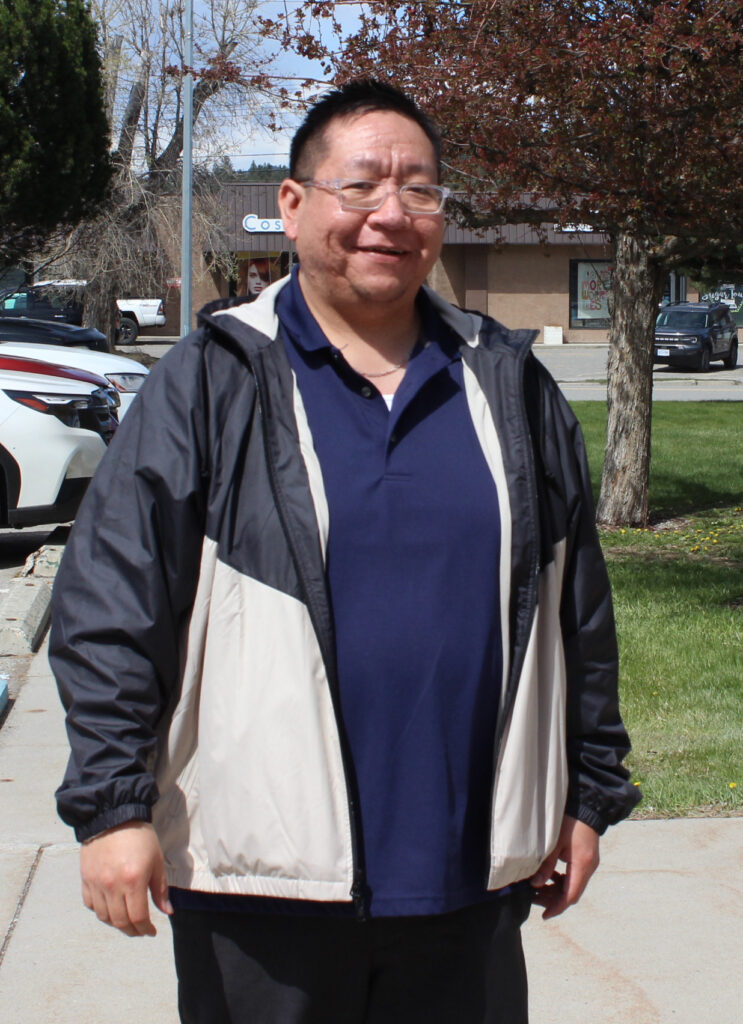
Interview with Jared Basil, Ktunaxa Cultural Framework Ambassador
Jared Basil has provided cultural safety training, practice framework training, and education to a number of health partners within ʔamakʔis Ktunaxa for the past seven years. We spoke with him at the Ktunaxa Nation Health Fair on June 16, 2026.
KNC: It’s exciting today. You see a lot of friendly faces, people you’ve worked with.
Jared Basil
Absolutely; it’s nice to see health partners and like-minded individuals coming together to support the Ktunaxa Nation and continue to display a level of allyship and advocacy, which is really important, especially in the ever-changing landscape that is social health.
Also good to see people that will articulate how the framework training resonated with them, how they were able to create practice-changing moments by way of the framework teachings. I think that the Ktunaxa Nation standing behind that document has done an excellent job of uplifting our values, our beliefs, what’s important to us, and allowing it to be the cornerstone of how we provide that sort of education and training.
KNC: Which groups have you worked with so far?
Jared Basil
I think probably the biggest benefactor of the work that I do might be Interior Health.
The East Kootenay Health Region, the East Kootenay Primary Care Network, urgent primary care centres, clinics, hospitals, you know, whether it’s in the Cranbrook area or all throughout ʔamakʔis Ktunaxa, working with a number of urgent primary care centers, a number of clinics, hospitals, long-term care facilities. Interior health is probably one of the biggest benefactors and one of the largest partners we have.
The work we do resonates with those types of partners in a really good way.
Child and Family Services, our own Ktunaxa Health Clinic, you know, a number of the partners that are in the facility today have gone through some level of framework training, or at least we’ve had a dialogue on how we can implement the framework teachings in all areas of social health, whether it’s treatment, recovery, addiction, all of those sorts of things. We want the framework to be an integral part and a meaningful part in health and wellness journeys.
KNC: Would you say this training can benefit all people who access services?
Jared Basil
Absolutely. One of the most beautiful things about the teachings in the practice framework is, while it highlights a Ktunaxa perspective, it highlights an additional focus: It humanizes healthcare. It humanizes the conversation all on its own. The teachings in the framework, while they’re grounded in Ktunaxa values, still offer the ability to generalize the information so that individuals can feel a part of the teachings and see themselves in the teachings.
And when you can make it relatable and translatable to self, you can then develop practice-changing moments, whether it’s in clinics and facilities like that, in a hospital setting, or in a treatment recovery and addiction setting.
The teachings in the framework have the ability to be adaptable and flexible, to meet the needs of any individual as they’re articulating and defining their health and wellness journey, allowing individuals to be subject-matter experts on themselves.
KNC: How can people avail themselves of this knowledge?
Jared Basil
Well, certainly starting with reaching out to the Ktunaxa Nation Council Social Investment Sector to contact me as Ktunaxa Cultural Framework Ambassador.
I can be an advocate and an ally in providing training, access to training, or at least starting the conversation, right?
At the same time, we would, at some point in the future, want to see a return on that investment. And that means culturally safe care for Ktunaxa citizens. That means culturally safe services for Ktunaxa citizens. When we can get there and we see that sort of reciprocity, then we’ve done our job and our partners have done theirs.
KNC: Are we starting to see that?
Jared Basil
I hope so. The one thing we need to be mindful of and offer ourselves some grace and some humility on this work is that some of this is going to be generational in nature.
This notion in healthcare, especially in Western education, medicine and science, that we need to have all the answers now, we are problem-solvers by nature, and, don’t get me wrong, there’s times where there’s a necessity for that, but we have the understanding that this is generational work, and if we can equip this generation or the next generation with the tools to navigate cultural safety, to be able to navigate the political landscape that changes around us that will be inclusive, it will create opportunities for empowerment.
If we can document what works well today, and also document what doesn’t work well, then we equip the next generation of healthcare workers, the next generation of patients and providers, professionals, with the tools to navigate things we couldn’t see coming.
That’s generational thinking.
So while we are starting to see incremental changes, I think we need to offer ourselves the grace and some humility to know that some of this is going to take some time.
KNC: You must have so many contacts all across the homelands now in this work, eh?
Jared Basil
Absolutely. I’ve been doing this work close to seven years, predominantly starting in social health with the East Kootenay Health Region and the East Kootenay Primary Care Network. The change in title to being the Ktunaxa Cultural Framework Ambassador has allowed us to open up our scope and our audience a little bit.
There are folks within education, whether it’s at the K-12 school district level or post-secondary level, there are folks reaching out that want to be a part of and want to seek and provide framework training, whether it’s to their staff or whether it’s in their organization.
Regional districts, municipal governments, the provincial government as well, and the federal government.
We’ve taken the framework training to Victoria and reached a number of ministries. Industry and business is prioritizing this sort of work and so some of our partners within the economic region and the economic arm of the Ktunaxa Nation have also reached out and wanted training in this area, environmentalists, and the list goes on and on.
KNC: So it’s not just limited to healthcare providers?
Jared Basil
That’s right. Whether you’re in government or whether you’re in business and economics or you’re within social health or education, the teachings in the framework have a way of impacting those specific focus areas, but also just allow for the humanizing of conversations so that those practice-changing moments aren’t specific to social health.
KNC: What’s your summer looking like? Any time off?
Jared Basil
I’d love to take some time off, but at the same time I feel whoever wants the education should be privy to the education, and so I try to make myself as available as possible.
One of our Ktunaxa values, one of our teachings, is that you take only what you need.
However, the late Herman Alpine put it so eloquently one time, and it’s always stayed with me: “You take only what you need, except for an education. Education is the one place and the one time where you take more than you need, you take all you can get.”
KNC: So, not just a formal workshop setting but you’d be willing to have a conversation and and share resources with people?
Jared Basil
Yeah, it doesn’t always have to be these big educational or training forums. It could be one-on-one discussions, a Zoom or a Teams meeting, right?
As technology evolves so does our ability to provide training and education.
There are a lot of avenues and pathways for us to explore. It starts with willingness.
And I think when our partners (whether it’s in education or our social health or not) when our partners display a level of willingness, there needs to be some reciprocity and we’re willing to meet them halfway.