“We are bound by Creator’s Natural Law, ʔa·knumuȼtiⱡiⱡ, which requires the protection of ʔamakʔis Ktunaxa now and forever.”
Introduction
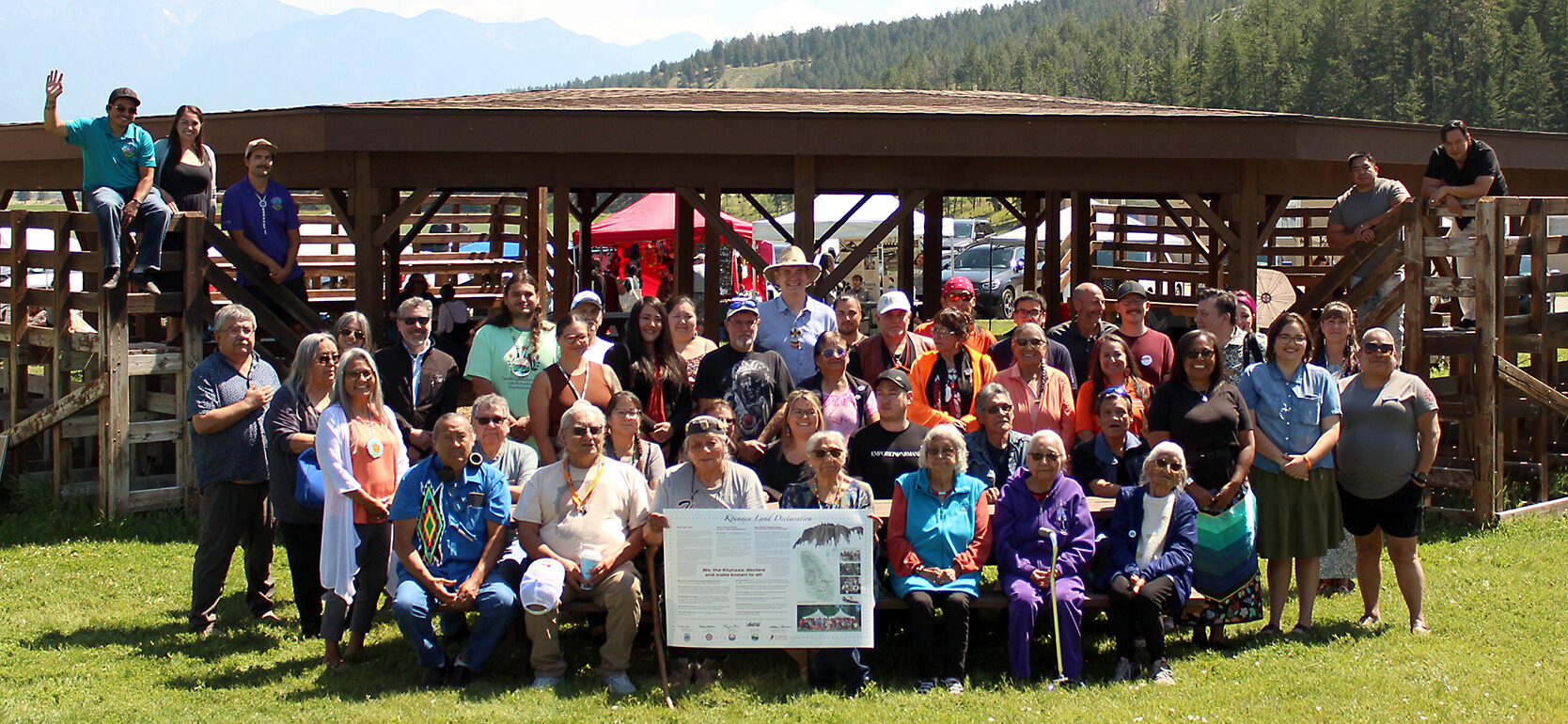
The four Ktunaxa First Nation nasuʔkin and the Ktunaxa Nation Council Chairperson signed the Ktunaxa Land Declaration on July 16, 2025. At that time, many Ktunaxanin̓tik signed a companion document endorsing the declaration.
The Ktunaxa Land Declaration is a modernization of the original Kootenay Nation Land Claim and Declaration document, which was issued on July 8, 1981.
The original declaration was an expression of Ktunaxa sovereignty during a time when we were ignored, and our rights were denied, by Canada, British Columbia, and the outside world.
The modernized declaration is the result of several years of collective effort, including three years of intensive engagement with Ktunaxa leaders, Elders, and ʔaqⱡsmaknik̓ (people). But it builds upon centuries of Ktunaxa engagement in securing rights for Ktunaxa ʔaqⱡsmaknik̓ in the face of nearly overwhelming pressures.
What it affirms
The Ktunaxa Land Declaration affirms the inherent rights and stewardship of the Ktunaxa Nation over lands in ʔamakʔis Ktunaxa.
Ktunaxa Land Declaration
Who We Are
WE, THE KTUNAXA, are the peoples of ʔamakʔis Ktunaxa, our territory and homeland, where we have lived since time immemorial. We are also known as Kootenay in Canada, and Ksanka, Kootenai, or Kutenai in the United States.
Our Nation currently includes the four Ktunaxa First Nations: ʔakisq̓nuk, ʔaq̓am, Yaqan Nuʔkiy and Yaq̓it ʔa·knuqⱡi’it in Canada, and we recognize and affirm our enduring connection to our sister Ktunaxa communities in the U.S.: Ksanka, of the Confederated Salish and Kootenai Tribes of Montana, and ʔaq̓anqmi, the Kootenai Tribe of Idaho.
Our Creation and ancient oral histories tell us where our lands are: Stretching from Ya·qawiȼ̓ⱡi·ki (near the Big Bend of the Columbia River) in the north, straddling Naⱡmuqȼin (Rocky Mountains) southeasterly to Ya·qawiȼ̓ⱡam̓ki (southwest Montana), thence northwest to Kik̓siⱡuk and ʔakink̓aʔnuk (Castlegar area), thence north to Ktunwakanmituk Miȼ̓qaqas (Revelstoke area), and north of the Big Bend of the Columbia River.
Our culture and identity are rooted in our land. Ktunaxa place names, stories and songs passed down from untold generations are a rich cultural heritage written across our homeland. Our language, ʔa·kⱡukaqwum, is ancient and a language isolate, unrelated to any other in the world. ʔa·kⱡukaqwum is integral to our identity—we are the Ktunaxa ʔaqⱡsmaknik̓.
Our Covenants Since Time Immemorial
WE HONOUR THE COVENANTS given to us by Creator to live in, occupy, utilize, protect, cherish and celebrate ʔamakʔis Ktunaxa.
We are bound by Creator’s Natural Law, ʔa·knumuȼtiⱡiⱡ, which requires the protection of ʔamakʔis Ktunaxa now and forever.
Yaqaⱡ Hankatiⱡiⱡki na ʔamak—Our people care for the land, the land cares for our people—is our stewardship responsibility.
We steward our lands, water and air to honour and respect ʔa·kxam̓is ̓q̓api qapsin—All living things—as anything that affects one affects everything else, including ourselves.
ʔa·kuk̓pukamnam is how we identify as being Ktunaxa, through our ancestral lineage. That is, we have roots that tie us to ʔamakʔis Ktunaxa, and we are of this land.
We Have Persevered, Survived and Flourished
WE HAVE ALWAYS RESISTED incursions to our territory and efforts to deny our existence and extinguish our rights. Our ancestors protected our territory by joining together to seek treaties of mutual recognition and respect with other Indigenous peoples and, where necessary, to fight.
When the first Europeans arrived, we welcomed trade and commerce and offered to share our wealth with the newcomers. We never consented to these newcomers taking our lands. We have never been defeated in war, nor have we entered into treaties with the Crown or ceded our lands.
Despite the creation of colonial boundaries that sought to divide us, we never consented to the creation of the Canada – U.S. border. We deny the Federal and Provincial claims to ownership of ʔamakʔis Ktunaxa.
We were party to petitioning the Prime Minister of Canada in March of 1912 to seek recognition of our rights—to no avail. We affirmed the Kootenay Nation Land Claim and Declaration in July, 1981, to express to the world our inalienable right to maintain our sovereignty.
In spite of all the atrocities laid upon us, we maintain our cultural connection to our land, our language, and our spirituality to this very day.
We continue to live and flourish, we have never left, and we will always remain in ʔamakʔis Ktunaxa.
We, the Ktunaxa, declare and make known to all:
We hold our inherent, sovereign rights and title to all the territory which we have held intact since time immemorial.
We reaffirm the declaration by our Chiefs of our Ktunaxa sovereignty and unceded title and rights as set out in the Kootenay Nation Land Claim and Declaration signed on July 8, 1981, and all that our leaders have said to settler society respecting our sovereignty to this land since contact.
We maintain our right as a sovereign Nation to govern ourselves and our territory in accordance with our own laws and traditions, including the right to use and occupy our land, decide how our land will be used, and enjoy the wealth that comes from our land.
We require the Crown to deal with us honourably, uphold our rights and recognize our laws and legal orders as a sovereign People.
We expect everyone to respect our rights, culture and decision-making processes.
We will refute other First Nations who make unsubstantiated claims to rights to our territory and homelands in present-day British Columbia.
We require other First Nations who visit these homelands respect our laws and protocols, as we would when visiting your homelands.
We are willing to work with other First Nations through processes based on mutual respect and recognition.
We are of one heart and mind to protect ʔamakʔis Ktunaxa for present and future generations of Ktunaxa.
We shall continue to work with the Confederated Salish & Kootenai Tribes of Montana and the Kootenai Tribe of Idaho, our sister Ktunaxa communities in the U.S., to protect and uphold Ktunaxa rights.
We maintain our right to develop laws and policies consistent with this Declaration.
Declared on the 23rd day of April , 2025, by the Chiefs and Councillors of ʔakisq̓nuk, ʔaq̓am, Yaqan Nuʔkiy and Yaq̓it ʔa·knuqⱡi’it First Nations at Kyaknuqⱡiʔit (Invermere, B.C.).
Timeline
Recognizes Indigenous title and rights; creates the basis for Crown-Indigenous relations.
David Thompson crosses the Rocky Mountains and establishes "Kootenae House."
Staff and medallion given to Kootenay Peoples from the Crown; now housed at Fort Steele Museum.
The Indian Act becomes federal law.
Amendment to the Indian Act makes the Sundance illegal.
The association petitions Prime Minister Borden on Indigenous rights; includes Kootenay Chiefs.
Indian Rights Association presses for recognition of rights; Kootenay Chief David participates.
Indian Rights Association dissolves, folds into Allied Tribes of B.C., which includes Kootenay / Ktunaxa.
Canada makes it illegal to advance Aboriginal Title cases through the Indian Act.
Allied Tribes of B.C. dissolves.
144 Chiefs meet to oppose the ‘White Paper’ and assert title.
Kootenay Chiefs attend.
The KIDC is formed by five bands.
It is later renamed Kootenay Indian Area Council (1974), Ktunaxa/Kinbasket Tribal Council (1991),
and Ktunaxa Nation Council (2005).
A caravan travels to Ottawa to lobby for Indigenous rights to be part of the Canadian constitution. Ktunaxa people participate and the caravan later travels to Europe.
The declaration is signed by Kootenay Chiefs and the Kootenay Indian Area Council Coordinator.
Recognizes “existing Aboriginal and treaty rights.”
Leads to hundreds of court cases.
Kootenay Traditional Land and Resource Use Study completed.
ʔakisq̓nuk hosts this event to marks 100 years under the reservation system.
Court rejects Crown claim that Aboriginal title was
extinguished in 1871 when B.C. joined Canada.
The B.C. government passes the Declaration on the Rights of Indigenous Peoples Act (Declaration Act, DRIPA) into law.
The UN Declaration on the Rights of Indigenous Peoples Act
becomes federal law in Canada on June 21, 2021.
The Ktunaxa Nation Council Lands and Resources Council (with representatives from each Ktunaxa First Nation in Canada) states its intention to revise the land claim declaration into today's language.
Three years of intensive engagement with Ktunaxa Leaders, Elders and ʔaqⱡsmaknik̓ informs a modernized Ktunaxa Land Declaration, which builds upon the work of 1981 Kootenay Land Claim and Declaration authors.
The Ktunaxa Leadership Table approves the updated declaration on April 23, 2025, and signs the declaration on July 16, 2025 during the Ktunaxa Nation Annual General Assembly.
Ktunaxa Land Declaration outlines who we are, our covenants and territory, our rights and our expectations.